Teenage Diary Font Review for Handmade Product Design
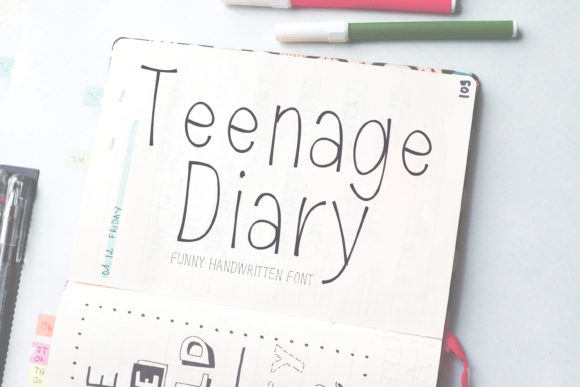
Last Tuesday, while finalizing a new collection of soy candle labels for my shop, I found myself staring at a screen full of overly polished script fonts that felt completely disconnected from the cozy, handmade nature of my products. I needed something that looked like it had been jotted down in a notebook rather than generated by a computer, which led me to test Teenage Diary on my actual packaging mockups. Teenage Diary is a cute and casual handwritten font with an incredibly friendly feel, and seeing it rendered on a 2x3 inch kraft paper label immediately transformed the design from generic retail to authentic artisan. This enchanting font will turn any creative idea into a true standout, especially when you are trying to bridge the gap between digital design tools and the tactile warmth of physical handmade goods.
Using Teenage Diary for Candle Labels and Product Packaging
When evaluating Script Handwritten Fonts for small-scale product packaging, legibility and emotional resonance are just as important as aesthetic beauty, and Teenage Diary manages to balance both without sacrificing charm. In my testing on candle labels and boutique tags, I discovered that this typeface excels at short, impactful phrases like scent names or "Hand-Poured With Love" rather than dense ingredient lists. The letterforms have a natural bounce and irregularity that mimics genuine marker or pen writing, which adds significant perceived value to handmade items because customers associate this visual style with personal care and attention to detail. However, makers should be mindful of scale; while Teenage Diary shines as a display font for titles and names, it can become difficult to read if sized below 14pt on printed materials, so I recommend pairing it with a clean sans serif font for technical details like burn times or safety warnings to maintain professional readability.
Readability Tips for Teenage Diary on Stickers and Tags
- Maintain Adequate Spacing: Because Teenage Diary has a casual, interconnected flow, increasing tracking slightly helps prevent letters from merging when printed on textured paper or vinyl stickers.
- Avoid All-Caps Usage: This script handwritten style is designed for mixed case or lowercase dominance; using all capital letters disrupts the natural rhythm and reduces the friendly, approachable mood essential for craft branding.
- Test Cut Lines First: If using this font with Cricut or Silhouette machines for die-cut stickers, always perform a test cut as the thinner connecting strokes may require a slower blade speed or thicker material setting to prevent tearing.
- Contrast is Key: The delicate nature of Teenage Diary requires high contrast against background colors; dark ink on light kraft paper or white vinyl ensures the intricate handwritten details remain crisp and visible in product photography.
Designing Wedding Invitations and Stationery with Teenage Diary
For stationery designers and Etsy sellers creating wedding suites, Teenage Diary offers a refreshing alternative to traditional calligraphy fonts by bringing a modern, youthful energy to formal paper goods. I recently used this font to design a welcome sign mockup and RSVP cards, finding that its inherent playfulness softens the stiffness often associated with wedding typography while still maintaining enough elegance for special occasions. When incorporating Teenage Diary into invitation designs, it works beautifully for couple names, venue locations, and header text, creating a focal point that feels intimate and personal rather than mass-produced. To maximize commercial appeal, consider utilizing OpenType features if available, such as alternate characters or swashes, which allow you to customize the flourishes on capital letters to create unique logo-like treatments for each client’s specific branding needs.
Pairing Teenage Diary with Serif and Sans Serif Fonts
Successful stationery design relies heavily on effective font pairing, and Teenage Diary acts as a versatile anchor when combined with complementary typefaces that ground its whimsical energy. For a classic editorial look, pair this script handwritten font with a refined serif font like Playfair Display or Cormorant Garamond for body text, allowing the contrast between structured serifs and fluid handwriting to guide the reader’s eye through the information hierarchy. Alternatively, for a more contemporary minimalist aesthetic, combine Teenage Diary with a geometric sans serif font like Montserrat or Lato; this combination is particularly effective for digital downloads and printable wall art where clean lines and ample whitespace help the decorative font breathe. Always ensure that your secondary font choices do not compete for attention, as Teenage Diary is designed to be the star of the composition while supporting fonts handle the functional heavy lifting.
Creating Digital Printables and Wall Art with Teenage Diary
Digital product creators and printable artists will find that Teenage Diary translates exceptionally well to screen-based viewing and home printing, making it ideal for planner pages, quote art, and educational materials. When designing digital assets, the font’s organic texture prevents designs from looking flat or sterile on monitors, adding a layer of depth that encourages customer engagement and social media sharing. I tested this typeface on a series of motivational wall art prints and found that its friendly personality resonates strongly with audiences looking for decor that feels uplifting and accessible rather than austere or overly formal. For commercial font licensing compliance, always verify whether your purchase includes rights for selling end products versus templates, as many handmade sellers use Teenage Diary to create customizable Canva templates or SVG files that other crafters can personalize for their own projects.
Optimizing Teenage Diary for Merchandise and Apparel
Applying decorative Fonts to merchandise like tote bags, t-shirts, and mugs requires careful consideration of production methods, and Teenage Diary proves surprisingly adaptable across various customization techniques. During a heat transfer vinyl test on cotton tote bags, I observed that the font’s stroke width holds up well to weeding and pressing, provided you avoid scaling it down to microscopic sizes where fine details might lift or peel over time. For sublimation printing on ceramic mugs, the ink saturation brings out the subtle variations in the letterforms that mimic real ink bleed, enhancing the handmade illusion even on factory-produced blanks. However, makers should exercise caution when using Teenage Diary for embroidery digitizing; the variable stroke widths and casual connections may require manual stitch editing to prevent thread breaks or puckering, making it better suited for simpler satin stitch outlines or appliqué guides rather than complex running stitch text.
Evaluating Commercial Licensing and File Formats for Teenage Diary
Before integrating Teenage Diary into your business workflow, it is crucial to understand the technical specifications and legal permissions that govern its use in commercial handmade products. Most premium font licenses distinguish between personal use, small business commercial use, and extended licensing for large-scale manufacturing or template resale, so reviewing the specific terms included with your download protects your shop from potential copyright issues. Check that your font package includes OTF, TTF, and WOFF formats to ensure compatibility across design software like Adobe Illustrator, Cricut Design Space, and web platforms if you plan to use the typeface in your online store’s branding. Additionally, multilingual support is a vital consideration for sellers targeting international markets; verifying that Teenage Diary includes accented characters and special glyphs ensures that your product labels and marketing materials remain inclusive and professionally typeset regardless of the language required.